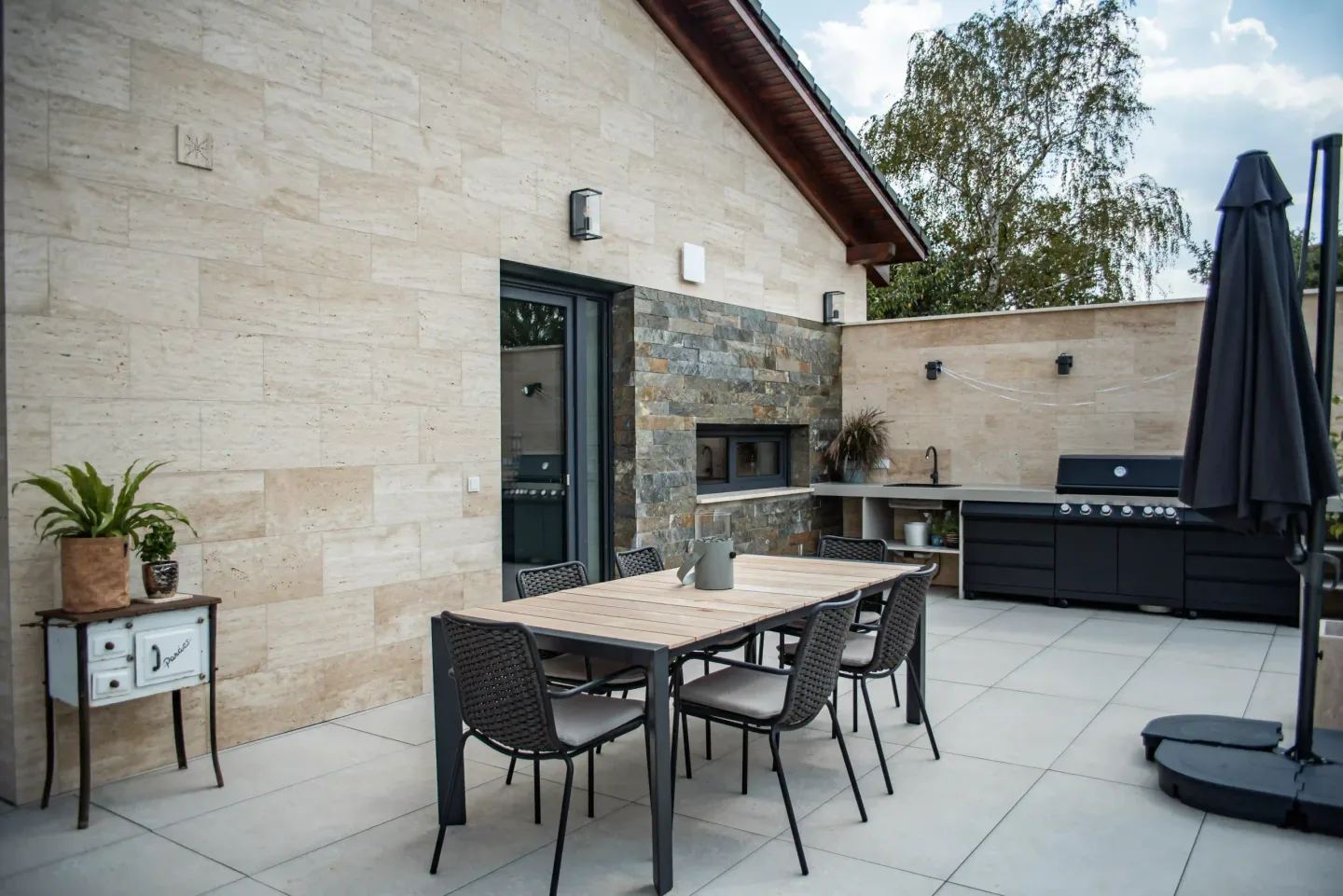
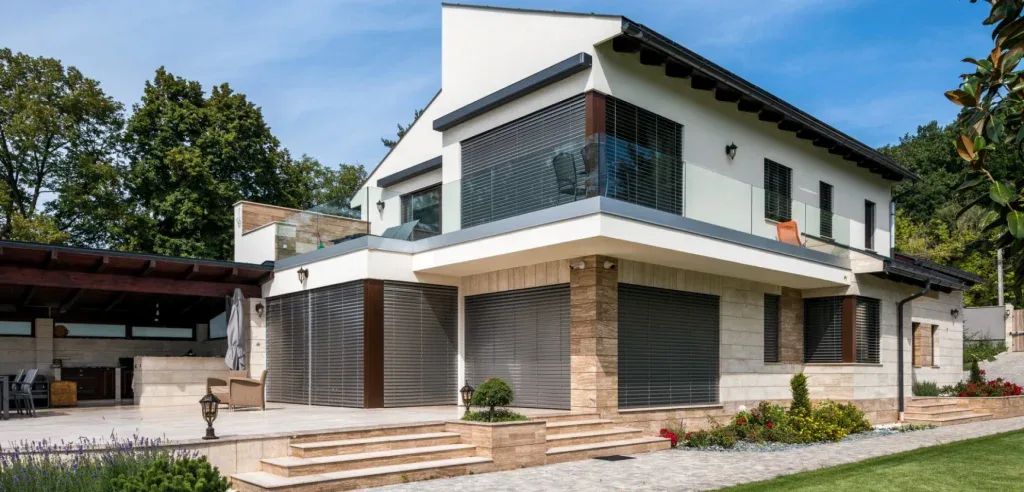
The selection of the terrace covering is not only an aesthetic issue, but also a series of practical aspects. Because while all the pages in the catalog photos are beautiful, in reality the blinding light, the hot summer sun, the coffee stain or the ice-cold winter will quickly show which cover is the real survivor. Now we will take a look at the most popular covers – Travertine limestone, Porcelain stoneware, Granite "And we'll also tell you what you should pay attention to before spending a small fortune."
1. Cleanability - friend or enemy?
The first test of the casing is not beauty, but that How do you handle everyday. And here we are not just thinking about dust: coffee, wine, leaves, moss, mud - this will all be part of the terrace.
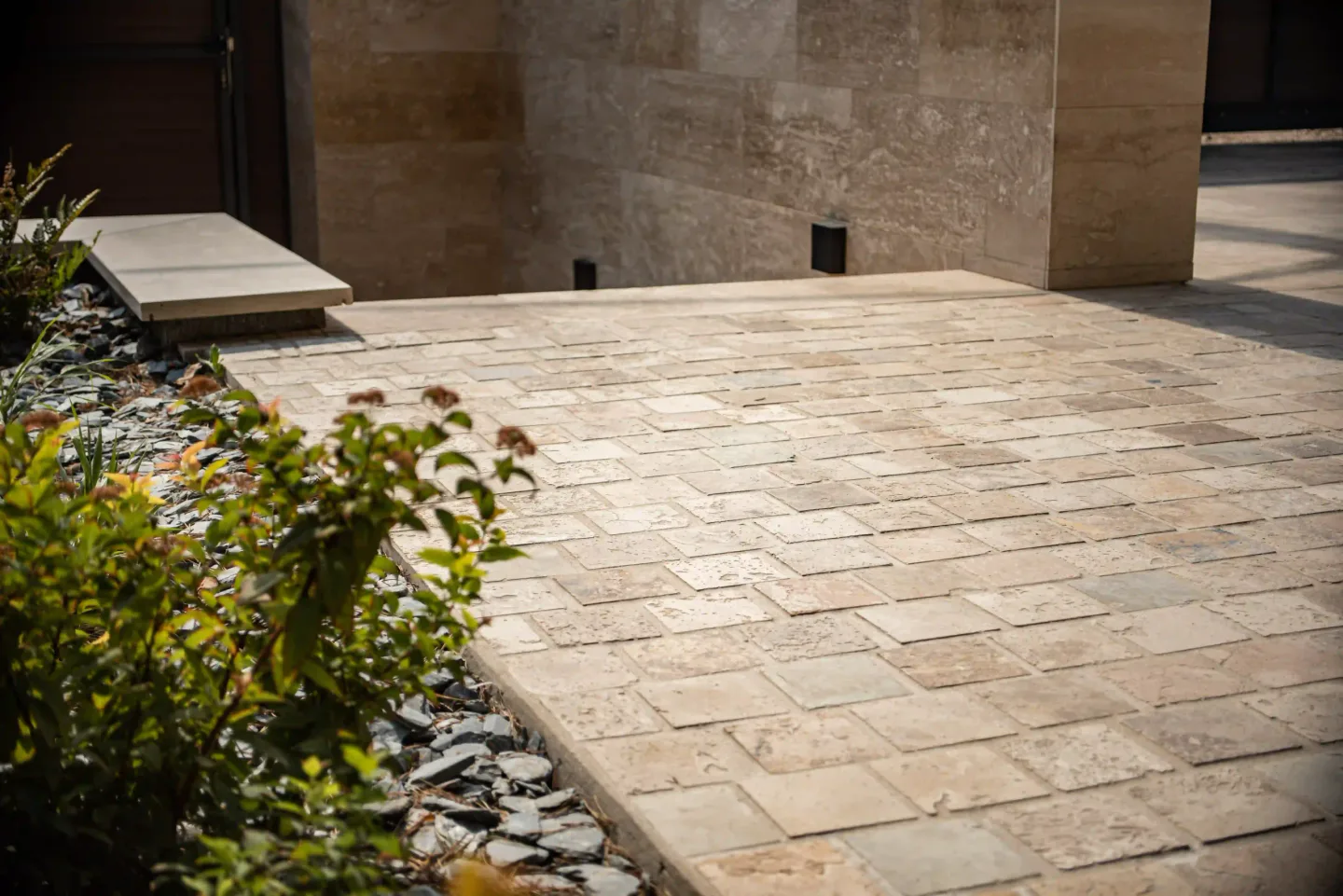
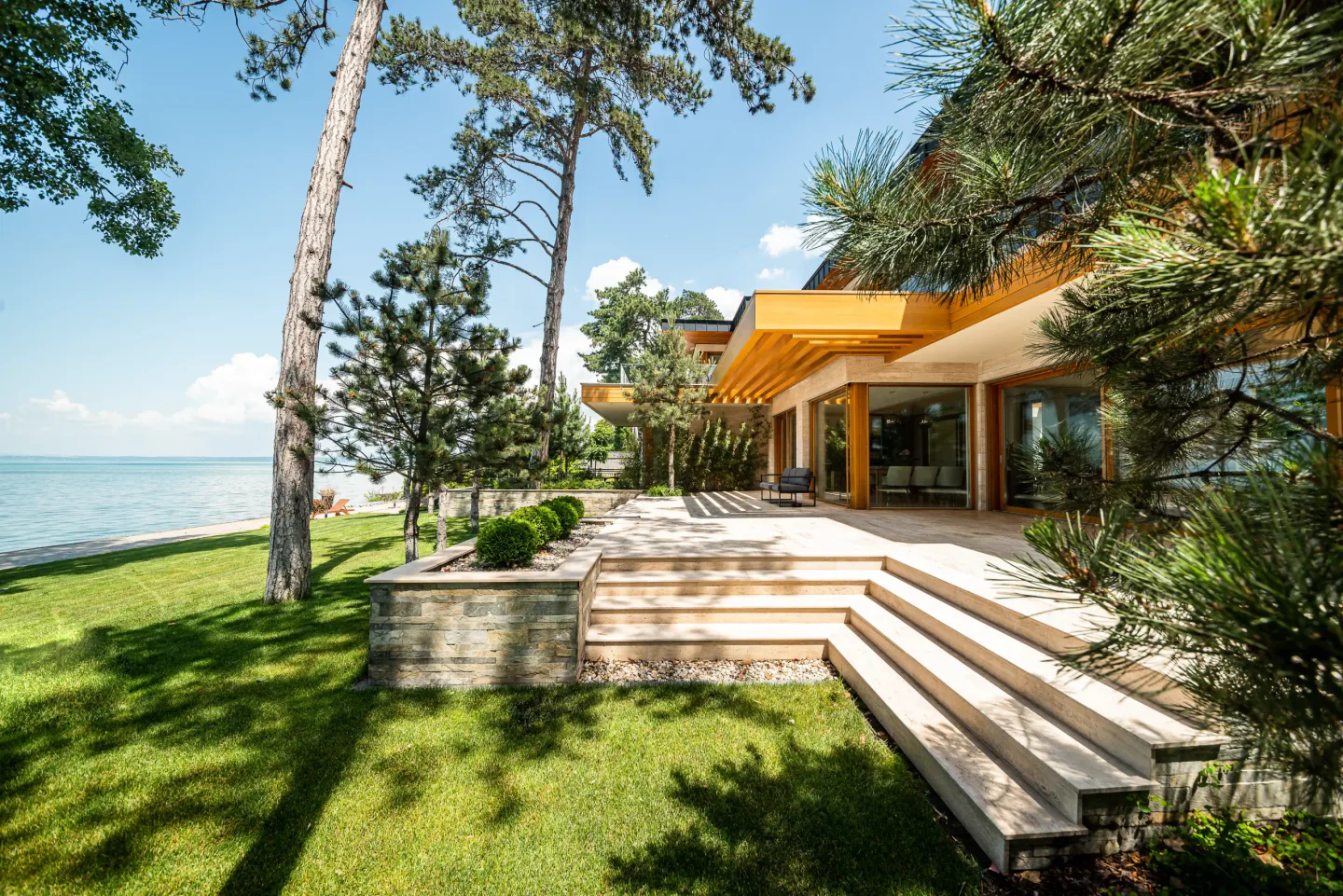
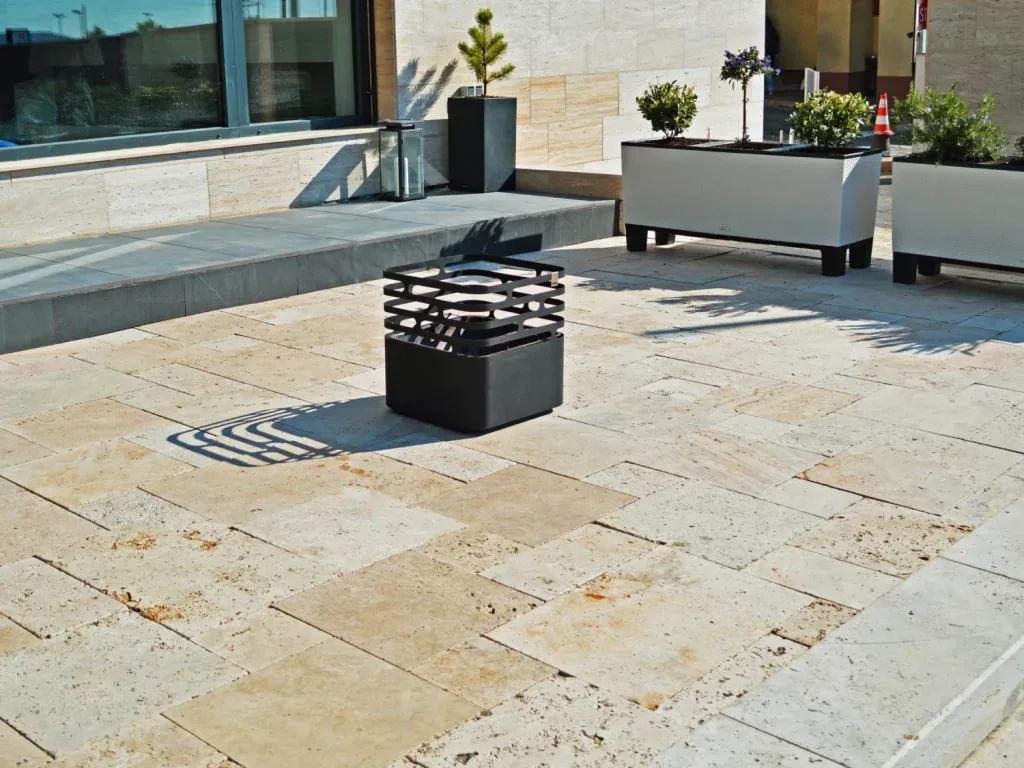
- Travertine limestone – It exudes a beautiful, natural, Mediterranean atmosphere... and loves to absorb the stains. Its porous structure is like a sponge: once something goes into it, it's hard to get it out. It can be impregnated, but it's not a panacea either.
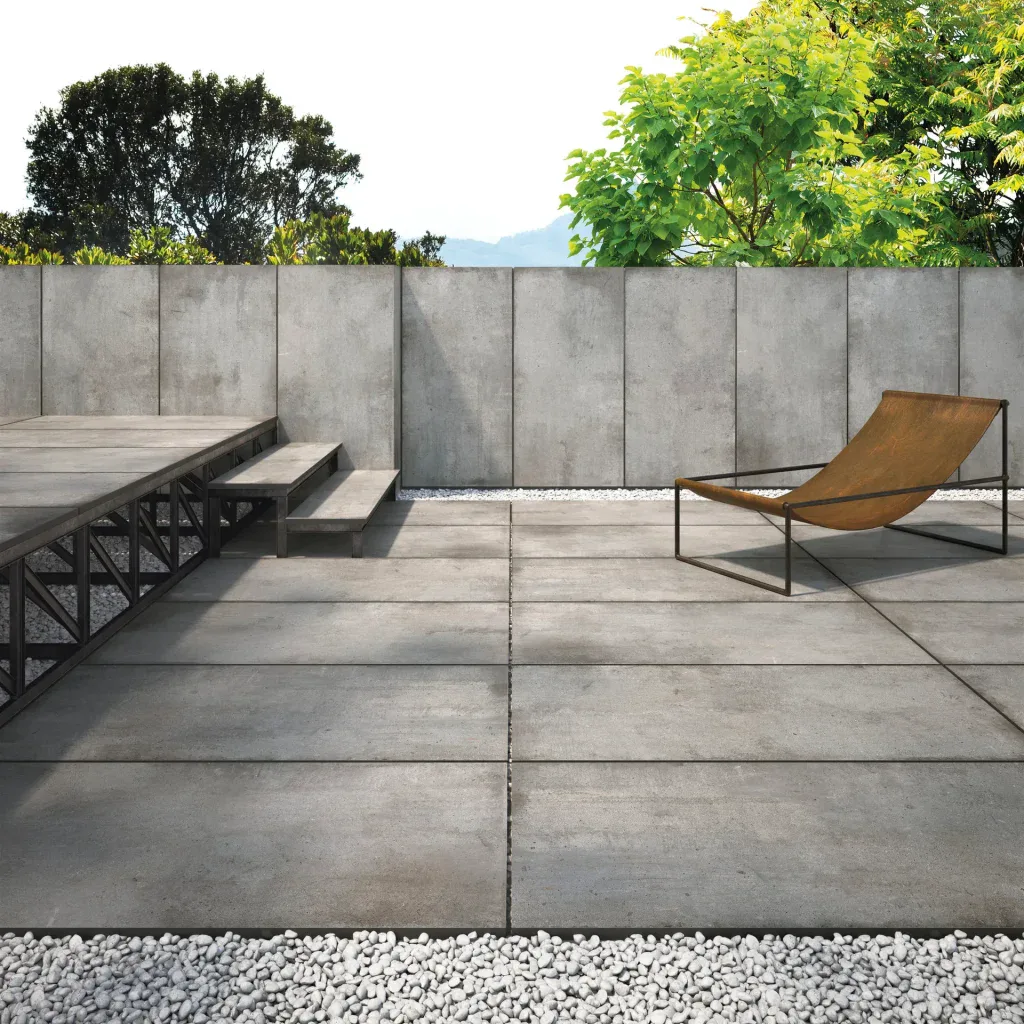
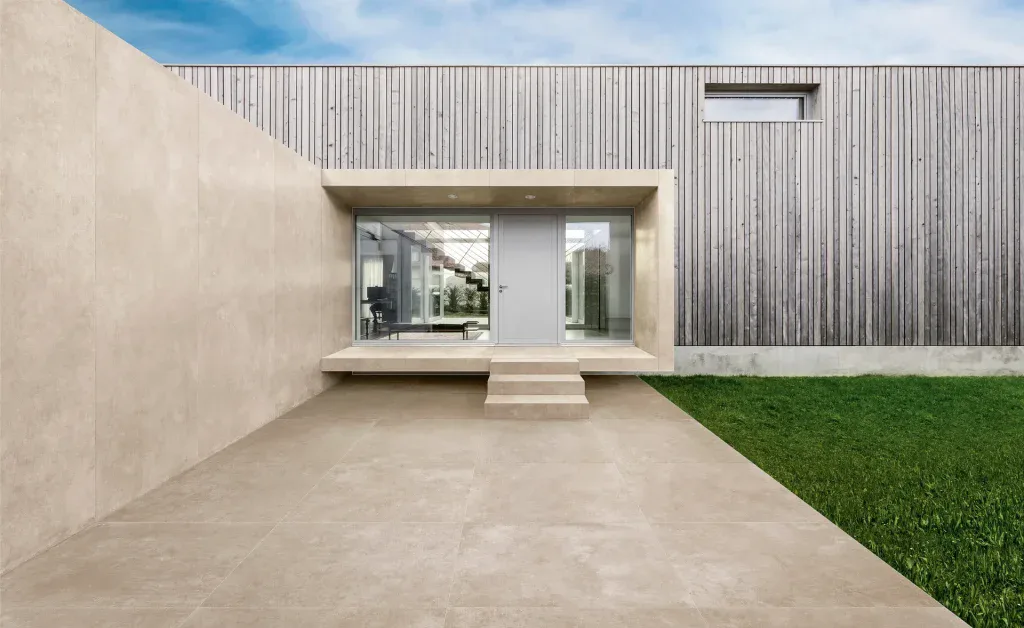
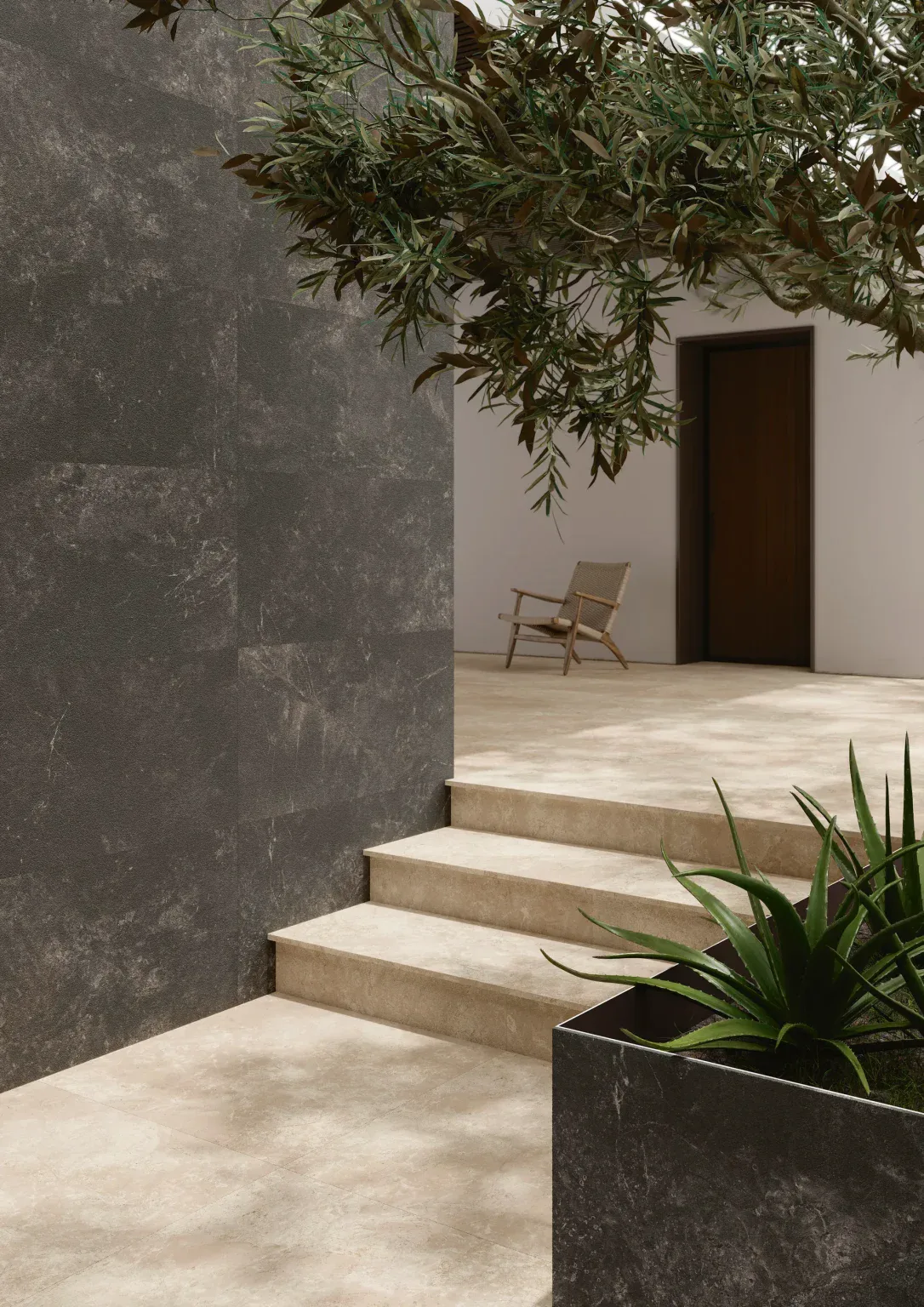
- Porcelain stoneware "The champion of practicality." not sucking in liquids, easy to clean and withstands most outside challenges. If you really want carefree use, he will be your best friend.
- Granite – It can also be cleaned well, especially if its surface is polished or sand-blown. Natural stone is more resistant than limestone, but it still does not reach the level of the gres in terms of cleanability.
2. Colors - Don't go blind, don't burn
A bright cover looks beautiful…as long not blinding me during the day, as if you were in the Sahara. The dark is stylish... Just don't try to step on it barefoot in the summer.
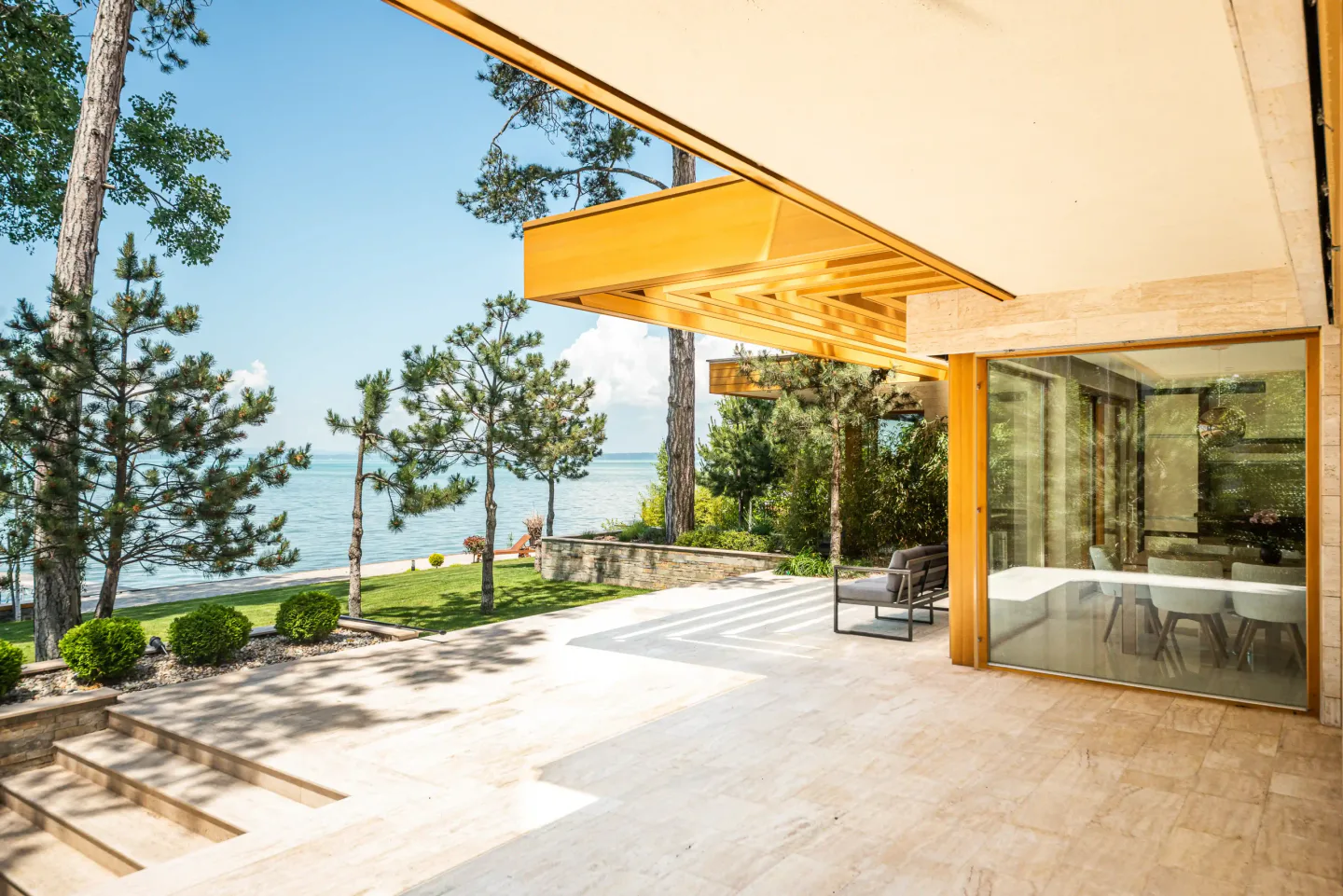
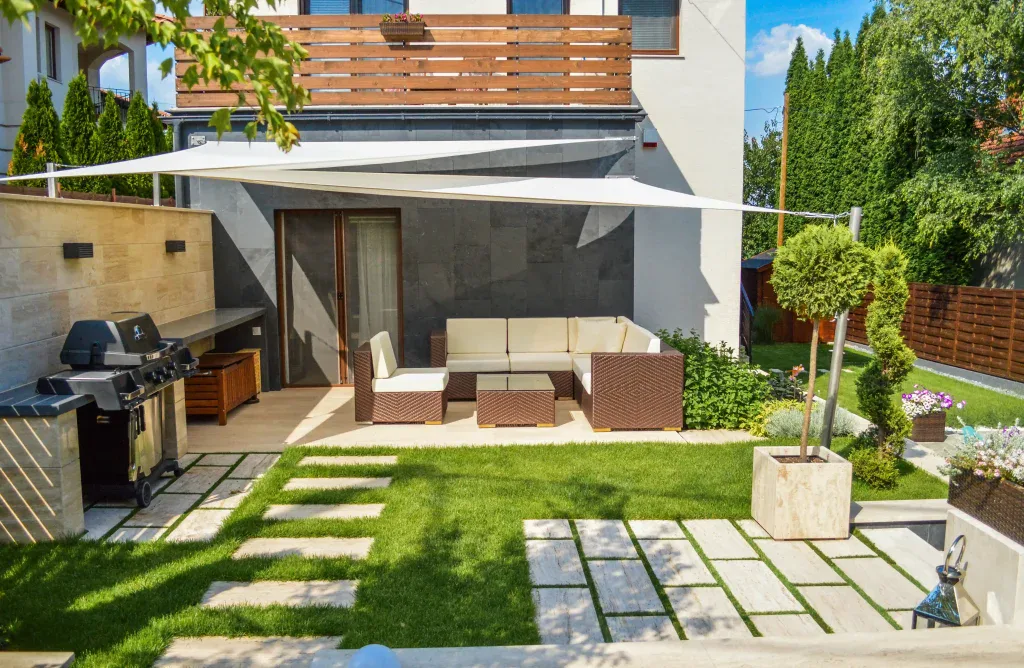
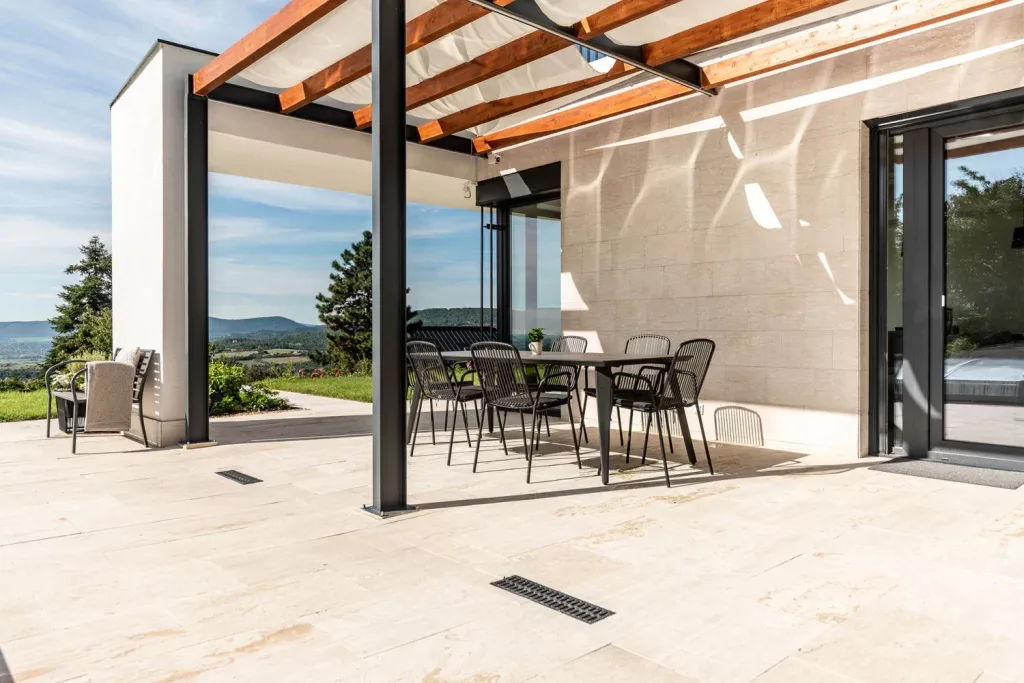
- The light travertine It gives a more pleasant feeling of heat, even in hot weather it doesn't glow like other coverings. Therefore is especially recommended for pool, if we don't want grilled soles.
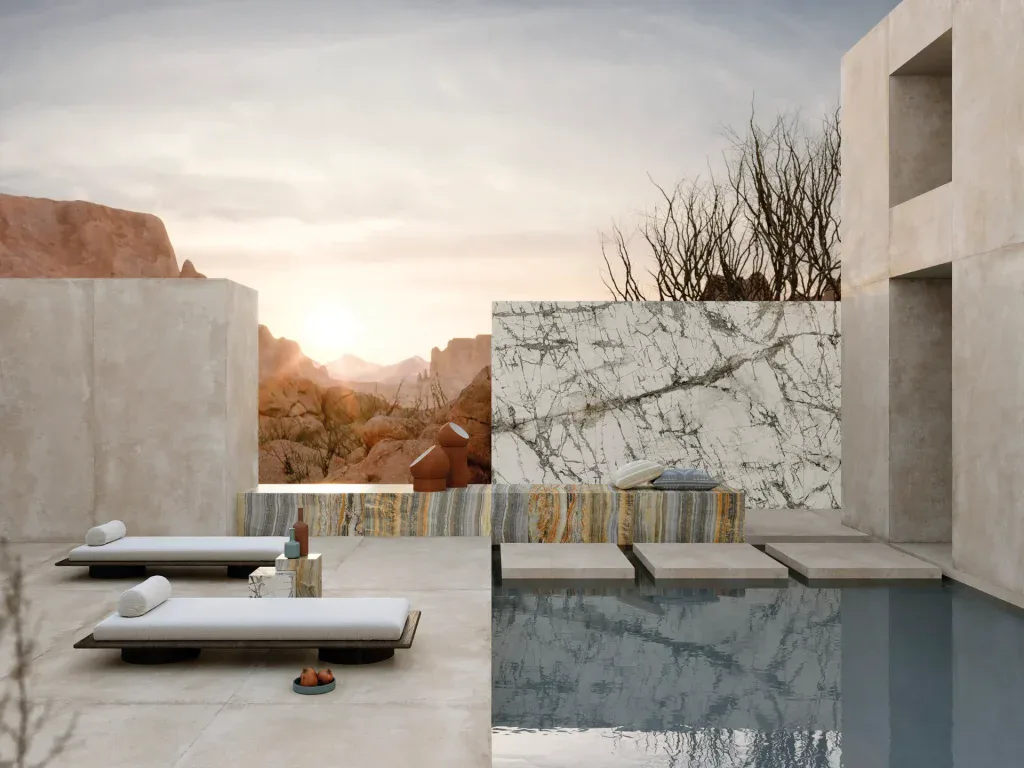
- The clear slabs However, as surprising as it is, become more overheated, like natural stones of a similar color. So don't just look at the color, but also the material!
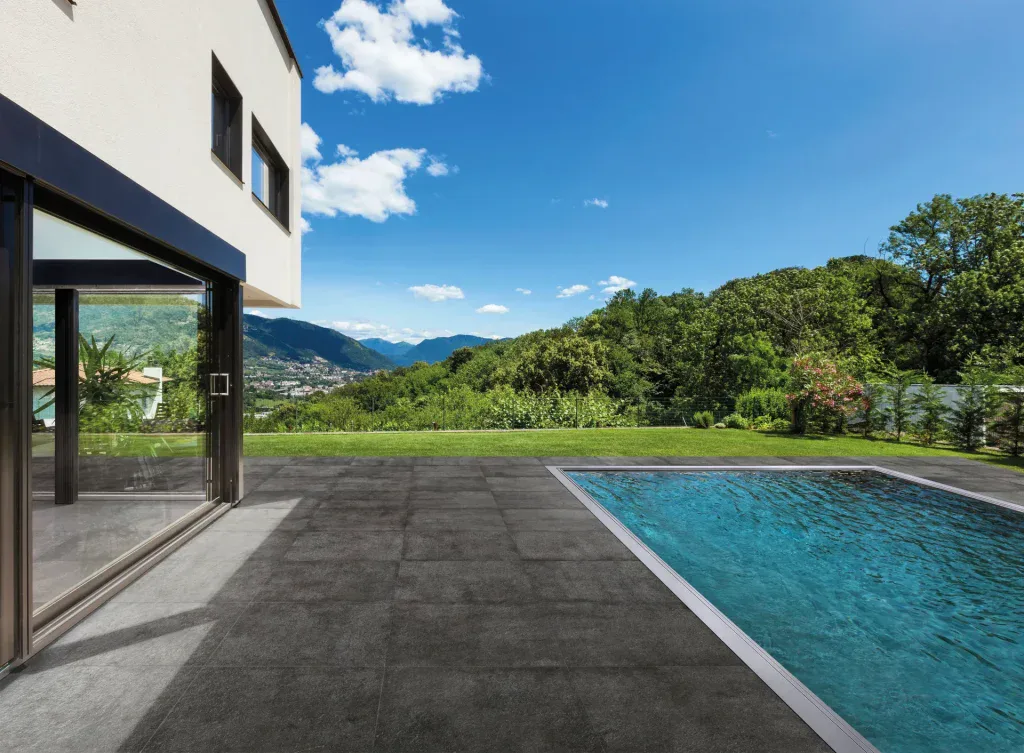
- The dark pavements All materials will be warm, but especially with granite and gres: they will easily heat up to over 60 degrees.
3. Surface - don't fall on your face (neither in winter or summer)
The structure of the interface is a key question: Risk of slipping, wear resistance, walking comfort – all affect everyday usability.
- The slippery sheets They can be dangerous, especially after rain or in winter. The smooth, shiny gres sheets Avoid Outdoors - Choose instead non-slip version.
- The Travertine limestone By default, it can slide in a rougher, but polished version, and if it is not frost-resistant, it can also crack.
- The cracked or rough granite slabs hold stable but in return are difficult to clean – For example, they are quite a serious challenge when clearing snow. A plain gres sheet is also unbeatable here.
So what should be the decision?
it depends, What is more important to you: Natural beauty, simple maintenance, or uncompromising durability?
- Mediterranean atmosphere, naturalness: Travertine limestone
- Maintenance-free everyday: Porcelain stoneware
- Premium, timeless appearance: Granite